
What a patio or hardscaping project costs in Spartanburg
By Elena Haddad · Updated 2026-06-25
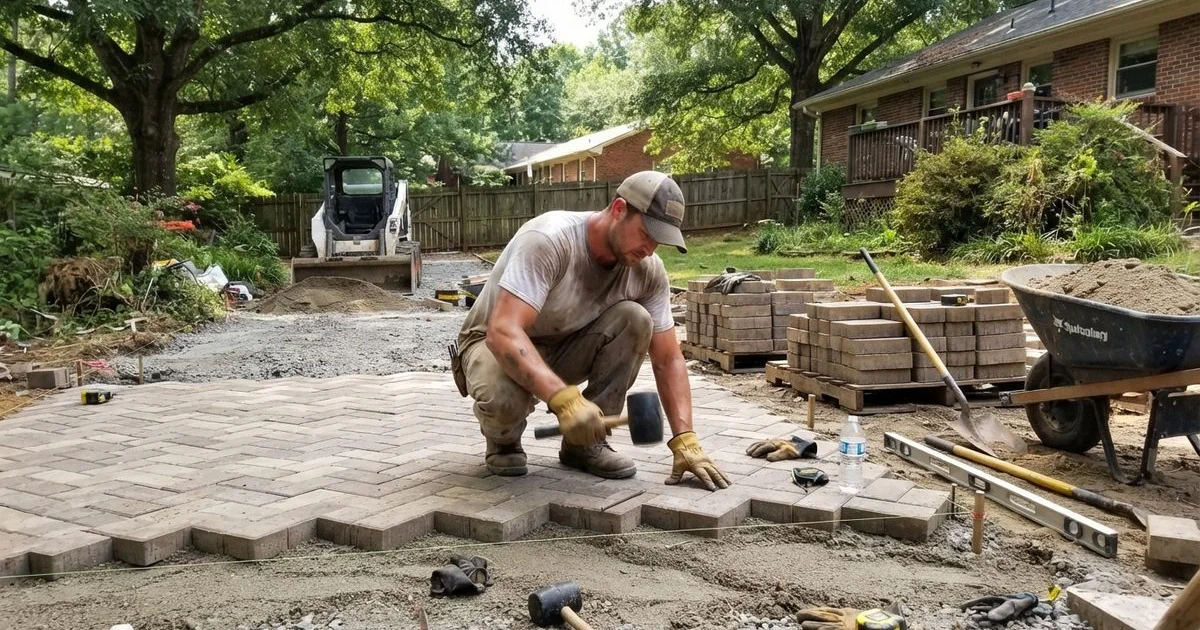
Hardscaping quotes in Spartanburg can range widely for what looks like a similar patio, and the reason usually comes down to two things: the material you pick and what happens underground before a single stone gets placed. Neither of those show up clearly when you are just comparing a bottom-line number.
Material is the most visible cost driver
Hardscape materials sit on a fairly predictable cost ladder, from least to most expensive:
- Gravel is the least expensive option, suited to informal paths and low-traffic areas.
- Poured concrete costs more than gravel, offers a clean, uniform surface, and holds up well to consistent use.
- Pavers (concrete or clay units set individually) cost more again, but offer more design flexibility and are easier to repair piece by piece if one gets damaged.
- Natural stone sits at the top of the range, valued for its appearance and durability, with a price that reflects both the material and the skilled labor to cut and fit irregular pieces.
None of these is the “right” choice universally. A gravel path might be exactly what a side yard needs, while a natural stone patio makes more sense as a focal outdoor living space.
What is happening underground
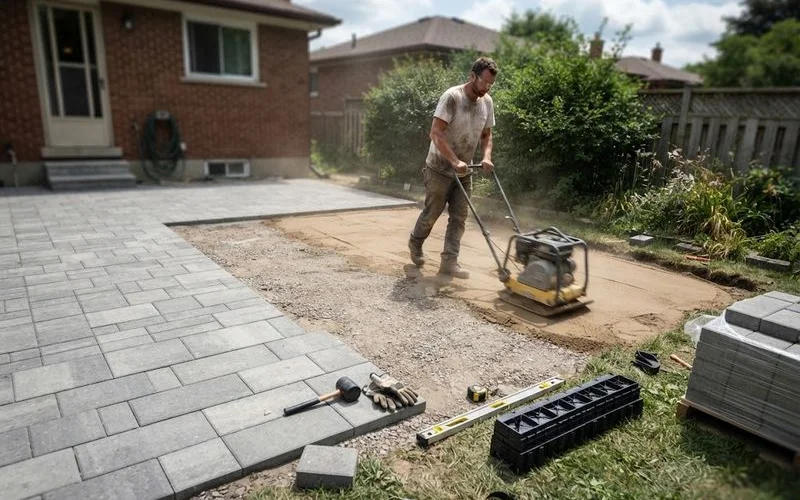
A hardscape job starts with excavation and a compacted gravel base, typically several inches deep depending on soil and the load the surface needs to bear. This step is invisible once the project is finished, but it is the reason a patio lasts ten years instead of cracking after two.
Spartanburg’s red clay soil is part of why this matters more here than in some regions. Clay shifts with moisture, and a shallow or poorly compacted base is the most common cause of a sunken, wavy, or cracked patio within a few seasons. Ask any contractor directly what depth of base they are planning and what compaction equipment they use before you sign off on a quote.
Cost factors summary
| Factor | Effect on price |
|---|---|
| Material choice (gravel to natural stone) | Largest single driver of overall cost |
| Project size (square footage) | Scales cost roughly with area |
| Base depth and soil conditions | Deeper prep on clay-heavy or sloped sites adds labor |
| Retaining walls over a few feet | Often needs engineering and a permit, adding cost |
| Drainage design | Proper grading and drainage add cost but prevent expensive repairs later |
| Site access | Tight or obstructed access can slow equipment and raise labor cost |
Retaining walls and drainage add their own considerations
Retaining walls carry real engineering requirements once they pass a certain height, since they are holding back soil under real pressure. A wall that fails is not just a cosmetic problem, it can undermine a slope or damage what is above it. Confirm whether your project needs a permit and factor that into both cost and timeline.
Drainage is easy to overlook until it becomes a problem. A patio or wall that traps water against a foundation, or redirects runoff onto a neighbor’s property, creates issues well beyond the original project. A contractor who asks about drainage and grading before quoting is generally thinking ahead in a way that pays off later.
Comparing quotes properly
Ask for a written scope specifying base depth and material, drainage plan, and whether joints are set with polymeric sand or mortar. A lower quote that skips these details is not necessarily a bad deal, but you want to know what you are actually getting before comparing numbers side by side. The same rule applies to any yard project: whether you’re weighing patio bids or what routine lawn care costs, an itemized breakdown beats a single bottom-line number every time.
Photos of a contractor’s older work tell you more than recent installs alone, since base failures usually show up over time rather than immediately.
Browse Spartanburg’s hardscaping and patio contractors to compare local project photos and reviews, and see our methodology for how we score them. You can also start from the full directory if you are still deciding what kind of project fits your yard.
FAQ
- Why is gravel so much cheaper than a paver patio?
- Gravel needs minimal prep and no individual unit installation. Pavers require excavation, a compacted base, edge restraints, and setting each piece individually, which adds a lot more labor even before material cost is counted.
- Do I need a permit for a retaining wall?
- Walls over a certain height typically need engineering and a permit in most South Carolina jurisdictions. A licensed contractor should know the local threshold and handle the permit as part of the project rather than leaving it to you.
- Why does base prep matter so much to the price?
- Spartanburg's clay soil shifts with moisture. A shallow or poorly compacted base is the main reason patios crack, sink, or heave within a couple of seasons, so proper prep depth is worth paying for even though it is invisible in the finished result.
- Can I get a cheaper quote by supplying my own materials?
- Sometimes, but it can backfire. A contractor who did not select the materials may not catch issues like the wrong paver thickness for your base design until installation has already started.