
Lawn chemical and pesticide safety around kids and pets
By Elena Haddad · Updated 2026-07-12
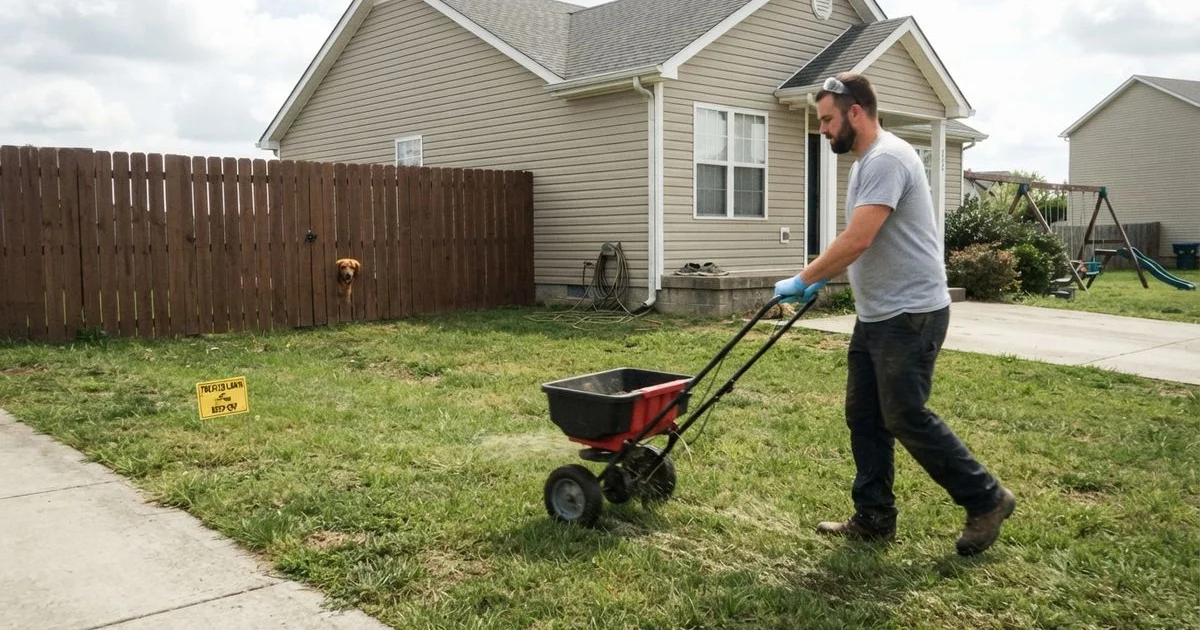
This is general safety information, not medical, veterinary, or legal advice. Always follow the specific product label and consult a professional for concerns about your household.
Keeping a healthy lawn in Spartanburg’s climate often means some level of chemical treatment, whether that is a pre-emergent herbicide in early spring or a fertilization program through the growing season. None of this needs to be a source of anxiety, but it is worth understanding a few basics before treatment day.
Ask about licensing before you ask about price
South Carolina requires anyone applying pesticide, herbicide, or fungicide commercially to hold a state pesticide applicator license. This is not a formality. Licensing means an applicator has demonstrated knowledge of proper handling, timing, and application rates. It is entirely reasonable to ask a provider directly whether they are licensed for the specific chemical work you are hiring them for, separate from any general landscaping license question.
What re-entry timing actually means
Every labeled lawn chemical product specifies a re-entry interval, the period after application when people and pets should stay off the treated area, usually until it has dried completely. This interval varies by product, so a blanket rule like “wait 24 hours” is not reliable across every treatment. Ask your provider directly what the specific product requires and mark your calendar or fence off the area if young kids or pets are likely to wander onto it before it is safe.
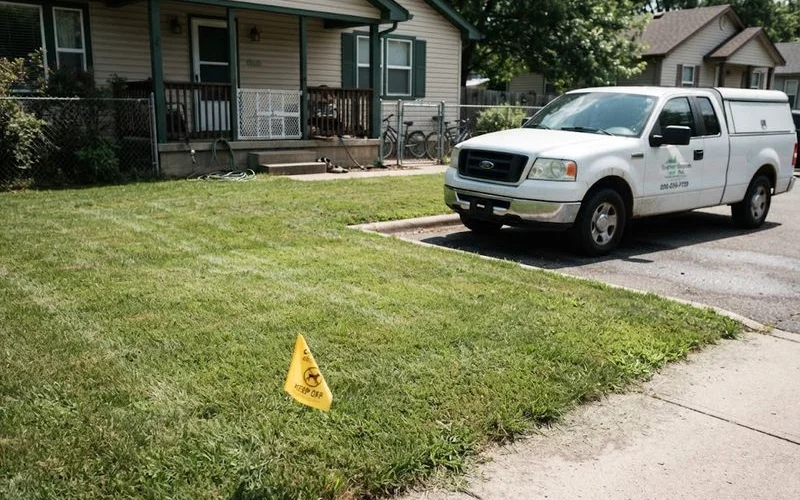
Reasonable precautions during a treatment season
| Precaution | Why it matters |
|---|---|
| Ask for the specific product name and safety data sheet | Gives you more detail than the general label summary |
| Keep kids and pets off the area until fully dry | Follows the labeled re-entry period for that specific product |
| Store any leftover product out of reach | Reduces accidental exposure risk between treatments |
| Rinse paws or skin after direct contact | A reasonable precaution even after the labeled re-entry period |
| Ask about edible gardens specifically | Not all lawn products are formulated with food-safe use in mind |
Pre-emergent herbicide, briefly
A pre-emergent herbicide is applied before weed seeds sprout and works as a barrier that stops germination rather than killing existing weeds. Timing is everything with this type of treatment: applied too late, after weeds have already emerged, it does very little. A provider who talks through timing rather than just scheduling a generic spring visit is generally showing more attention to doing the job right.
Weighing whether treatment is necessary at all
Not every lawn needs a full chemical program. A yard with minimal weed pressure and healthy, dense turf may do fine with cultural practices alone: proper mowing height, adequate watering, and periodic aeration. If you are hesitant about chemical treatment, ask a provider whether your lawn’s condition actually warrants it, or whether a lighter touch would work. A provider willing to have that conversation honestly, rather than upselling a full program regardless of need, is usually one worth trusting with more of your yard.
When to involve a professional versus handling it yourself
Store-bought weed and feed products are widely available, and for a small yard with minor issues, careful DIY application following the label exactly is a reasonable option. Larger properties, specific pest or disease problems, or any situation where you are unsure what you are treating are better handed to a licensed applicator who can identify the actual issue rather than guessing.
Browse Spartanburg lawn care providers who offer licensed treatment programs, and see our methodology for how we evaluate them. You can also start from the full directory if you are comparing providers for other yard work at the same time.
FAQ
- Is it safe to let kids and pets on the lawn right after treatment?
- Most product labels specify a re-entry period after application, often until the treated area has dried. This is general information, not a substitute for the specific product label your provider uses, so always ask the applicator directly what their product requires.
- Does my landscaper need a license to apply pesticide or fertilizer?
- Yes. South Carolina requires a pesticide applicator license for anyone applying herbicide, fungicide, or similar chemical treatments commercially. It is reasonable to ask a provider to confirm they are licensed before you hire them for this specific work.
- Are pre-emergent herbicides different from what gets sprayed on weeds later in the season?
- Yes. A pre-emergent herbicide is applied before weed seeds germinate and works by preventing sprouting, while a post-emergent treatment targets weeds that have already grown. Timing matters a lot for both to work as intended.
- What should I do if my pet seems unwell after being on a treated lawn?
- Contact your veterinarian and mention the treatment and approximate application date. This is general safety information, not veterinary or medical advice for a specific situation.
Related on this site
- Browse lawn care & maintenance providers
- Best lawn care & maintenance in Spartanburg SC →
- What lawn care costs in Spartanburg and what changes the price
- DIY lawn care vs hiring a pro: what actually makes sense
- A season-by-season lawn care calendar for Spartanburg
- Renting in Spartanburg: who pays for lawn care, you or the landlord
- All guides →