
A season-by-season lawn care calendar for Spartanburg
By Elena Haddad · Updated 2026-07-15
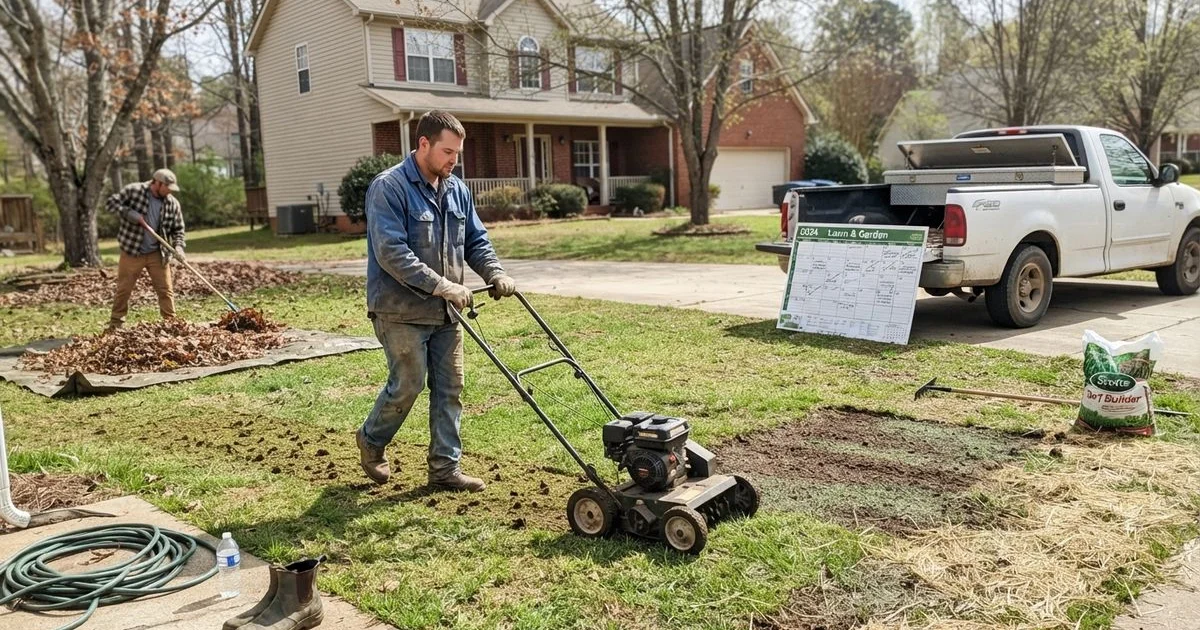
Spartanburg sits in an unusual spot for lawn care: the transition zone, where both warm-season grasses like Bermuda and cool-season varieties like tall fescue grow. That means the calendar here does not follow a simple “spring good, winter bad” pattern. Timing each task to the right window matters more than in regions with one dominant grass type.
The year at a glance
| Season | What typically happens | Key tasks |
|---|---|---|
| Early spring | Pre-emergent window before soil warms and weed seeds germinate | Pre-emergent herbicide application, first mow once growth resumes |
| Late spring | Warm-season grasses green up and enter active growth | Fertilization, start of regular mowing schedule, irrigation system startup |
| Summer | Peak growth for warm-season turf, heat and drought stress possible | Frequent mowing, consistent watering, monitoring for pest or disease pressure |
| Early fall | Cool-season grass growth window opens, warm-season growth slows | Aeration, overseeding if needed, fall fertilization |
| Late fall | Warm-season grass heads toward dormancy | Final mows, leaf cleanup, irrigation system winterization |
| Winter | Warm-season turf mostly dormant | Minimal mowing, dormant season pruning for trees and shrubs |
Why the pre-emergent window matters so much
Pre-emergent herbicide works by preventing weed seeds from germinating, which means it has to go down before those seeds sprout, not after. Miss this early spring window and you are left treating weeds after they have already established, which is a different and often more difficult problem. If you have historically fought the same weeds every summer, timing of this single early treatment is worth reviewing with your provider.
Aeration and overseeding, together but separate
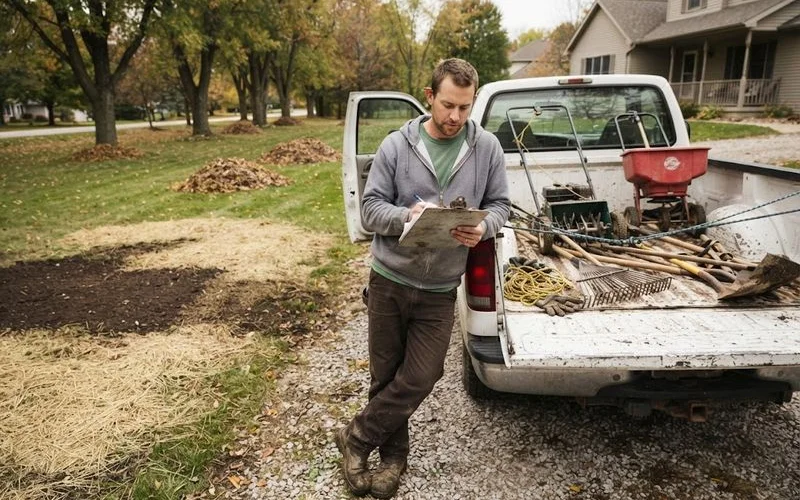
Compacted clay soil is common across Spartanburg, and it is a big part of why core aeration matters here more than in areas with looser soil. Aeration pulls small plugs of soil to relieve compaction and let water, air, and nutrients reach roots more easily. Overseeding, spreading additional grass seed into an existing lawn, is often paired with aeration in early fall, since the holes left behind improve seed-to-soil contact. They solve different problems though: aeration addresses compacted soil, overseeding thickens thin turf. A lawn can need one without the other.
Irrigation’s seasonal bookends
Two irrigation visits a year make a real difference: a spring startup that checks heads, pressure, and controller programming after winter, and a fall blowout that clears water from the lines before the first hard freeze. Skipping the fall shutoff is one of the most common causes of cracked pipes and valves once temperatures drop, so this is not a step worth skipping even if the system seemed fine all season.
Adjusting mowing height through the year
Mowing height is not a fixed number all year. Cutting a bit taller during summer heat helps grass retain moisture and shade its own roots, while a shorter cut heading into dormancy reduces matting under fallen leaves and winter debris. A provider who adjusts height with the season, rather than mowing to the same setting every visit, is generally paying closer attention to what your specific grass needs.
Putting it together
None of these tasks are complicated individually, but doing them in the wrong order or at the wrong time reduces how much they actually help. If you are managing your lawn yourself, a simple year-at-a-glance list like the one above helps you plan ahead instead of reacting task by task. If you are working with a provider, ask whether their program follows a seasonal schedule tailored to transition zone conditions, rather than a generic calendar built for one climate type.
Browse Spartanburg’s lawn care and maintenance providers to find a seasonal program that fits your yard, and see our methodology for how we evaluate them. Start at the homepage to explore the full directory.
FAQ
- Why does Spartanburg's location matter for lawn timing?
- Spartanburg sits in the transition zone, where both warm-season grasses like Bermuda and cool-season grasses like tall fescue can grow. That means timing advice from either a strictly northern or strictly southern climate does not map cleanly here, and getting the calendar right matters more than in areas with one dominant grass type.
- What is the single most common timing mistake?
- Applying pre-emergent herbicide too late, after weeds have already sprouted, is one of the most common mistakes. It only works as a barrier before germination, so timing has to happen ahead of the weed, not after you notice it.
- Do I need to aerate every year?
- Not necessarily. Aeration is most useful on compacted, clay-heavy soil, which describes a lot of Spartanburg yards, but a lawn with lighter foot traffic and better soil structure may only need it every couple of years.
- Should I keep mowing the same height all year?
- No. Mowing height typically needs to shift with the season and the grass's growth stage, cutting a bit taller during summer stress and adjusting again heading into dormancy. A provider familiar with your specific grass type can set the right schedule.
Related on this site
- Browse lawn care & maintenance providers
- Best lawn care & maintenance in Spartanburg SC →
- What lawn care costs in Spartanburg and what changes the price
- DIY lawn care vs hiring a pro: what actually makes sense
- Lawn chemical and pesticide safety around kids and pets
- Renting in Spartanburg: who pays for lawn care, you or the landlord
- All guides →